Reviewed by Sahil Chopra, MD.
Research by Savit Malhotra and Quynh Theresa Do.
Introduction
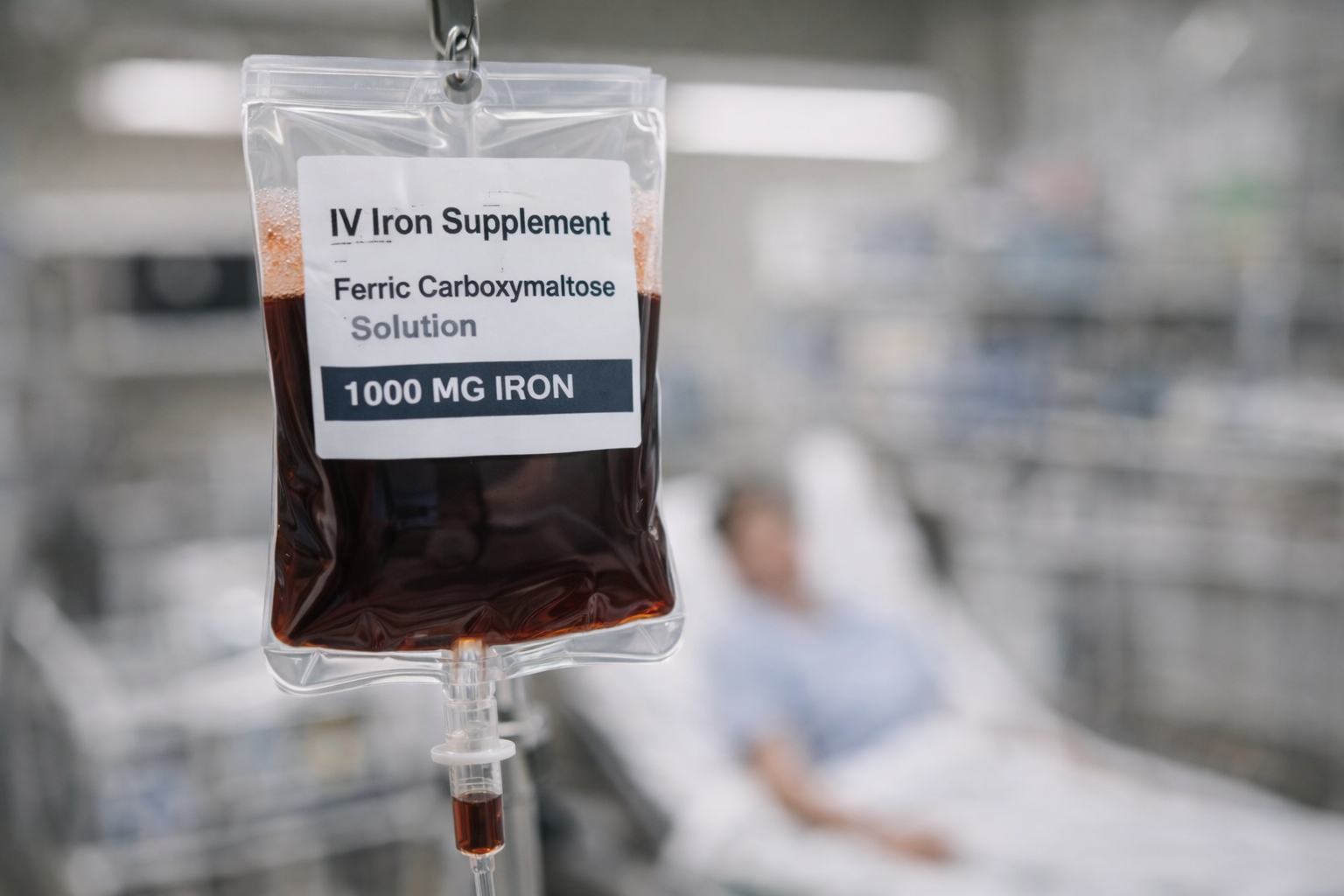
As we continue our discussion on RLS, we find ourselves landing on the topic of iron and its role in managing symptoms. Last week, we discussed oral iron and how it is effective in managing symptoms. However, oral iron is only one of two ways in which iron can be delivered to the body. This week, we will be discussing intravenous (IV) iron, which is often more recommended for treating RLS than oral supplements. We will begin by discussing the science behind these infusions and the emerging evidence of the role they play for RLS. We will then conclude by discussing some of the practical considerations and clinical implications for those who are managing their RLS with IV iron.
Science Behind Iron Infusion
As we have previously discussed, iron deficiency is one of the key reasons/mechanisms behind RLS. In fact, this relationship between RLS and iron deficiency dates as far back as 1953, often being attributed to a researcher named Norlander NB.[1] The reason for this relationship is due to the effects iron has on dopamine signaling. Those who are suffering from low iron experience disrupted dopaminergic signaling pathways due to decreased dopamine receptors and transporters, leading to an increase in extracellular dopamine.[2] Essentially, dopamine levels in the body begin to fluctuate, especially at night (which may help explain the characteristic symptoms of RLS). For more information on the dopaminergic pathway behind RLS, we encourage you to read our article explaining this in greater depth! One important note is that brain iron deficiency can exist even when blood iron levels appear normal, suggesting that RLS is not simply a systemic iron deficiency, but rather a disorder of impaired iron delivery or utilization in the brain.[3]
By restoring brain iron levels to normal through iron supplementation, the dopaminergic pathway functions are restored since iron is a critical cofactor for dopamine synthesis and regulation.[4] The reason why iron infusions are preferred over oral iron is that oral iron often cannot deliver the same amount of iron due to the gastrointestinal lining. Oral iron is often limited by gastrointestinal absorption, which restricts how much iron ultimately becomes available systemically. IV iron bypasses this limitation and rapidly increases systemic iron availability.[5] This may help overcome the impaired transport of iron into the body by transiently increasing circulating iron levels, allowing for greater delivery to the central nervous system.[6] Therefore, this increased iron delivery to the brain, specifically to a region known as the substantia nigra, which is responsible for dopamine production, allows the body to restore its dopamine pathways.[7] Taken together, iron infusions work not simply by correcting iron deficiency, but by restoring iron availability within the brain by bypassing limitations.
Emerging Evidence of Iron Infusions for RLS
Recent observational studies and trials have shifted treatment choices for RLS-related iron deficiency. Both oral and IV iron therapies have been shown to significantly reduce RLS symptoms.[8] Oral iron (ferrous sulfate) is widely used because it's accessible, affordable, and easy to take, especially when iron levels are clearly low.[9] However, oral iron can cause stomach upset and may not work as well when iron stores are only mildly low.[10] IV iron avoids these problems by delivering iron directly into the bloodstream. A recent trial found that both oral and IV iron improved RLS symptoms similarly at 6 weeks, but oral iron caused more side effects (mostly digestive problems at 55% vs 11%).[8] Longer-term data and meta-analyses also suggest that IV iron may yield more consistent and sustained relief, especially seeing improvement on scores of International Restless Legs Syndrome Study Group Rating Scale.[11,12,13]
In patients with moderate to severe RLS, patients refractory to first-line RLS treatments (e.g., gabapentinoids), or patients without overt systemic iron deficiency, IV iron may even be especially beneficial.[1,14] Magnetic Resonance Imaging (MRI) studies have shown that IV iron supplementation increases brain iron concentrations, which correlate with improvements in RLS symptoms and overall sleep metrics.[7] This connection between brain iron levels and symptom relief helps explain why iron supplementation (whether oral or IV) is considered a first-line treatment for RLS when iron levels are low.
Practical Considerations and Clinical Practice
Before starting iron therapy, your doctor will check your iron levels through blood tests. The American Academy of Sleep Medicine (AASM) recommends testing iron levels in all patients with significant RLS.[15] Your doctor will check several measurements:[16]
- Serum iron: This test measures the amount of iron currently circulating in your blood.
- Ferritin: This test measures the amount of the protein ferritin. Ferritin is a protein that stores iron in your body and saves iron for when you need it.
- Transferrin: This test measures the amount of the protein transferrin. Transferrin is a protein that transports iron through the blood. Therefore, measuring transferrin helps clinicians understand your body’s capacity for iron movement.
- Transferrin saturation: This test measures the percentage of transferrin that is currently carrying iron.
- Total iron-binding capacity (TIBIC): This test measures the total amount of iron your blood is capable of carrying. In other words, what is your blood’s ability to bind to iron and transport it throughout your body?
Ferritin and transferrin saturation tests are especially important for RLS. These tests can shed light on common features in RLS patients, such as depleted iron stores in the absence of anemia (through low levels of ferritin) and low availability of iron to tissues (through low transferrin saturation).[15] Blood tests should be administered in the morning and patients should avoid ingesting any food or supplements that contain iron for at least 24 hours.[16] Current guidelines recommend iron supplementation for adults with ferritin levels at or below 100 ng/mL or transferrin saturation below 20%. For ferritin levels between 75-100 ng/mL, IV iron is preferred because oral iron is poorly absorbed at these levels.[17]

Conclusion
For those who would prefer to avoid medications, or if medications simply aren’t working well for managing RLS symptoms, iron supplementation could serve as a potential treatment. As it stands, here are the current recommendations for treatment: gabapentin enacarbil, gabapentin, pregabalin, IV ferric carboxymaltose, IV low molecular weight iron dextran, and IV ferumoxytol (followed then by ferrous sulfate and other treatments). So, while gabapentin remains the most effective treatment, IV iron supplementation remains the next course of action.[a] However, everyone is different, and what works well for one person may not work well for another. For this reason, we encourage you not to give up when it comes to treating your RLS. And if you need help managing your RLS and finding a solution, the team here at Empower Sleep is ready to help!


.png)
.png)