Reviewed by Sahil Chopra, MD.
Research by Savit Malhotra
Introduction
There is something almost instinctively calming about water. A walk beside the ocean, an afternoon by a lake, or even a quiet view of a river can feel noticeably different from spending the same amount of time surrounded by buildings and traffic. Researchers increasingly refer to these environments as blue spaces, natural or designed outdoor environments in which water is a prominent feature, including oceans, beaches, lakes, rivers, canals, streams, and ponds.[2,3]
Blue spaces have been studied in relation to mental well-being, stress, physical activity, and general health, and researchers are now beginning to ask whether those benefits extend to sleep.[2,3,4,5,7] The direct sleep research is still relatively young, so it would be premature to say that living near water automatically makes someone a better sleeper. However, emerging evidence suggests that seeing and spending time around water may be associated with healthier sleep, potentially through relaxation, better mental well-being, physical activity, and the sensory qualities of natural environments.[1]
Can Being Near Water Actually Improve Sleep?
One of the strongest studies so far looked at 16,077 adults across 18 countries and compared six different types of exposure to nature, including blue views from home, living close to the coast, and recreational visits to blue spaces.[1] Adults who could see more blue space from home and those who visited blue spaces more frequently were less likely to report sleeping fewer than six hours per night. Interestingly, simply living within one kilometer of the coast was not significantly associated with insufficient sleep after researchers accounted for other factors.[1]
That difference is important. Having an ocean several blocks away may matter less than whether you can actually see it, visit it, or interact with it. This idea appears elsewhere in blue-space research as well. Studies across multiple countries have generally found stronger associations with well-being among people who actually visit green, coastal, or freshwater spaces than among people who simply live near them.[4] A 2026 umbrella review similarly emphasized that the mere presence of blue space does not necessarily represent meaningful exposure to it.[7]
Not every study has found a clear benefit. Research methods vary widely, with some studies measuring distance from water, others measuring visible water, and others asking how often people actually visit it. Reviews of freshwater and older-adult studies describe the overall findings as encouraging but heterogeneous, meaning that the effect probably depends on what kind of water environment it is, how people interact with it, and the population being studied.[5,6]
Why Might Blue Spaces Help Us Sleep?
One likely pathway is mental well-being. In the 18-country sleep study, better mental well-being helped explain much of the relationship between nature exposure and a lower likelihood of insufficient sleep.[1] This makes biological sense: stress, anxiety, and persistent mental arousal are common barriers to falling asleep and staying asleep. Separate reviews of blue-space research have found generally positive associations between exposure to water environments and psychological restoration or well-being, although the strength of the evidence varies considerably between studies.[2,3,7,8]
Blue spaces may also encourage behaviors that support sleep. A systematic review and meta-analysis found that people living closer to blue spaces tended to report somewhat greater physical activity, while larger amounts of nearby blue space were associated with both greater activity and psychological restoration.[3] Other reviews of nature-based activities have found improvements in anxiety, mood, and psychological well-being.[8,9] Exercise itself is associated with better sleep quality, so a waterfront walk, kayaking, swimming, or simply choosing a coastal trail over an indoor activity could indirectly support sleep through movement.[13] However, physical activity did not explain the blue-space-and-sleep relationship in the 18-country analysis, while mental well-being did.[1]
There may also be something about the sensory experience of water. Natural sound research suggests that nature soundscapes can support stress recovery. A 2024 systematic review and meta-analysis found that natural sounds produced favorable changes in measures such as heart rate, blood pressure, and respiratory rate compared with quiet conditions, although findings for perceived stress were less consistent.[10] Experimental studies have also found faster physiological recovery after stress while listening to natural sounds and possible stress-reducing effects from water sounds specifically.[11,12] These studies do not prove that ocean waves improve nighttime sleep, but they provide a plausible explanation for why spending time beside water can feel restorative.

Not All Blue Spaces Are Equally Restorative
The phrase blue space includes environments that can be dramatically different from one another. A quiet mountain lake, crowded urban waterfront, polluted canal, crashing ocean shoreline, and neighborhood pond all contain water, but they do not provide the same experience. Reviews of the blue-space literature repeatedly highlight this problem. Studies use different definitions of exposure, different health outcomes, and different types of water environments, making it difficult to identify one universal “blue-space effect.”[2,5,6,7] A recent systematic review focused specifically on freshwater environments found substantial variation depending on the type of water body, how exposure was measured, and the population studied.[5] An umbrella review published in 2026 similarly concluded that evidence for many blue-space health outcomes remains uncertain and that actual interaction with water environments needs to be distinguished from simply having water nearby.[7]
The surrounding environment matters too. A waterfront beside a major roadway may still expose visitors to noise and air pollution. A popular beach may be crowded and stimulating rather than quiet and restorative. Brightly illuminated waterfronts at night could potentially introduce the same artificial-light exposure discussed earlier in this environmental sleep series. Even natural water sounds are not universally relaxing: gentle waves may be soothing for one person while loud surf or rushing water may be disruptive for another. This is why blue space should not be thought of as a sleep treatment in itself. The quality of the experience probably matters as much as the presence of water.
How Can You Use Blue Spaces to Support Better Sleep?
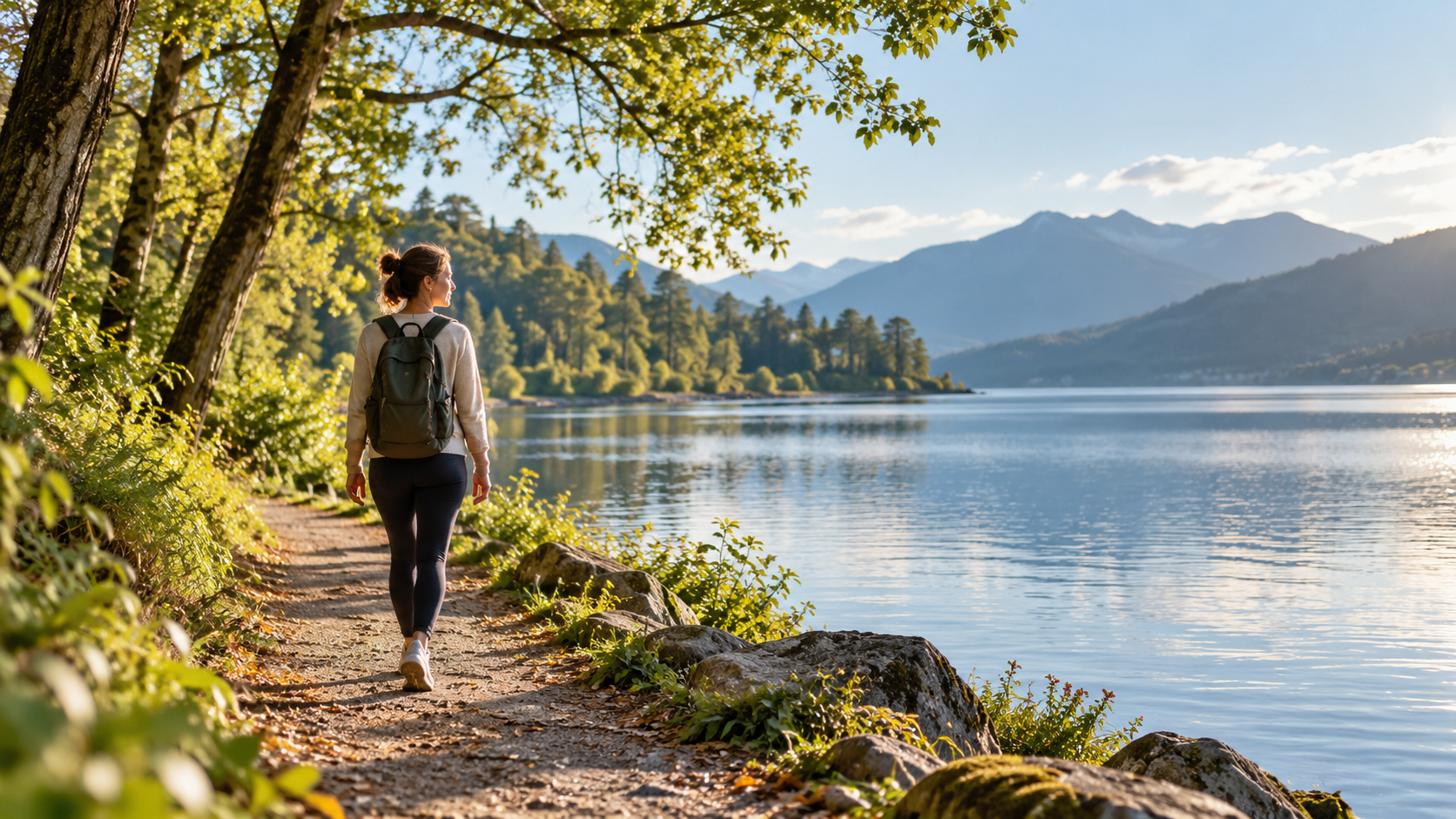
You probably do not need to live beside the ocean, or fall asleep listening to wave recordings, to take advantage of the potential benefits. Instead, blue spaces can be incorporated into the same daytime behaviors that already support healthy sleep. A morning walk beside a lake or river combines daylight exposure, physical activity, and contact with nature. Sitting near the water during a stressful day may provide an opportunity to slow down and mentally disengage. Recreational activities such as walking, swimming, kayaking, or simply spending time along a shoreline may combine movement with psychological restoration.[3,8,9]
If you already live near water, the research suggests that using the space may matter more than simply being geographically close to it.[1,4,7] Rather than thinking of proximity to the coast as automatically protective, think about opportunities for meaningful exposure: seeing water from where you spend time, walking beside it, taking breaks there, or incorporating a local lake, river, or beach into your normal routine. There is no established prescription saying that a certain number of minutes beside water will improve sleep, and blue-space exposure should not replace treatment for insomnia or another sleep disorder. But as part of a broader healthy routine, regular movement, daytime outdoor light, stress management, and a consistent sleep schedule, spending time around water may provide another environmental tool for supporting better rest.

Conclusion
The connection between blue spaces and sleep is still emerging, but the early evidence offers an intriguing message: being near nature may not be enough, actually experiencing it may matter more.In a large international study, people who saw water from home or regularly visited blue spaces were less likely to report insufficient sleep, while simply living close to the coast was not associated with the same benefit.[1] The relationship appeared to be explained partly by better mental well-being, fitting with broader research linking blue spaces with psychological restoration, stress reduction, and healthy activity.[2,3,4]
More research is needed before we can say exactly how oceans, rivers, or lakes influence sleep, or whether certain types of blue space are better than others. But the emerging evidence suggests that the environment supporting a good night's sleep may extend well beyond the bedroom. Sometimes, getting closer to better sleep might start with getting a little closer to the water.