Reviewed by Sahil Chopra, MD.
Research by Savit Malhotra and Quynh Theresa Do.
Introduction
In our previous blogs, we explored how heat and humidity can make it harder to fall asleep and stay asleep. As climate change continues to contribute to warmer temperatures, more frequent heat waves, and increasingly humid nights, creating a comfortable environment for sleep has become more challenging and more important than ever. An often-overlooked environmental factor that can also affect sleep is air quality. Whether it is wildfire smoke drifting across states, increased ozone levels during hot summer days, seasonal allergens, or pollutants trapped inside our homes, the air we breathe can have a profound effect on how well we sleep. On average, we take approximately 20,000 breaths every day, spending nearly one-third of our lives asleep.[1] During sleep, our bodies continue to rely on clean air to support essential body repair functions. Yet, indoor air can sometimes contain higher concentrations of pollutants than outdoor air. In this article, we will explore what air quality is, how it influences sleep, and practical steps you can take to create a healthier bedroom environment so you can breathe easier and sleep deeper.
What is Air Quality?
Air quality refers to how clean or polluted the air is based on the concentration of harmful particles and gases. Outdoor air quality is commonly measured using the Air Quality Index (AQI), which summarizes levels of several pollutants known to affect human health, including:[2]
- Fine particulate matter (PM2.5): Tiny particles measuring less than 2.5 micrometers in diameter. Because they are approximately 30 times smaller than the width of a human hair, PM2.5 particles can penetrate deep into the lungs and even enter the bloodstream.
- Ground-level ozone (O3): A gas formed when sunlight reacts with pollutants from vehicles and industrial emissions.
- Nitrogen dioxide (NO2): A gas produced primarily from vehicle exhaust and fossil fuel combustion.
- Sulfur dioxide (SO2): A gas generated mainly from burning fossil fuels.
- Carbon monoxide (CO): A colorless, odorless gas produced by incomplete combustion.
Indoor air quality is influenced by many of the same pollutants, as well as household sources such as cooking, candles, fireplaces, cleaning products, tobacco smoke, pet dander, dust mites, mold, and building materials that release volatile organic compounds (VOCs). Because people spend approximately 90% of their time indoors, indoor air quality has become an increasingly important public health concern.[3]
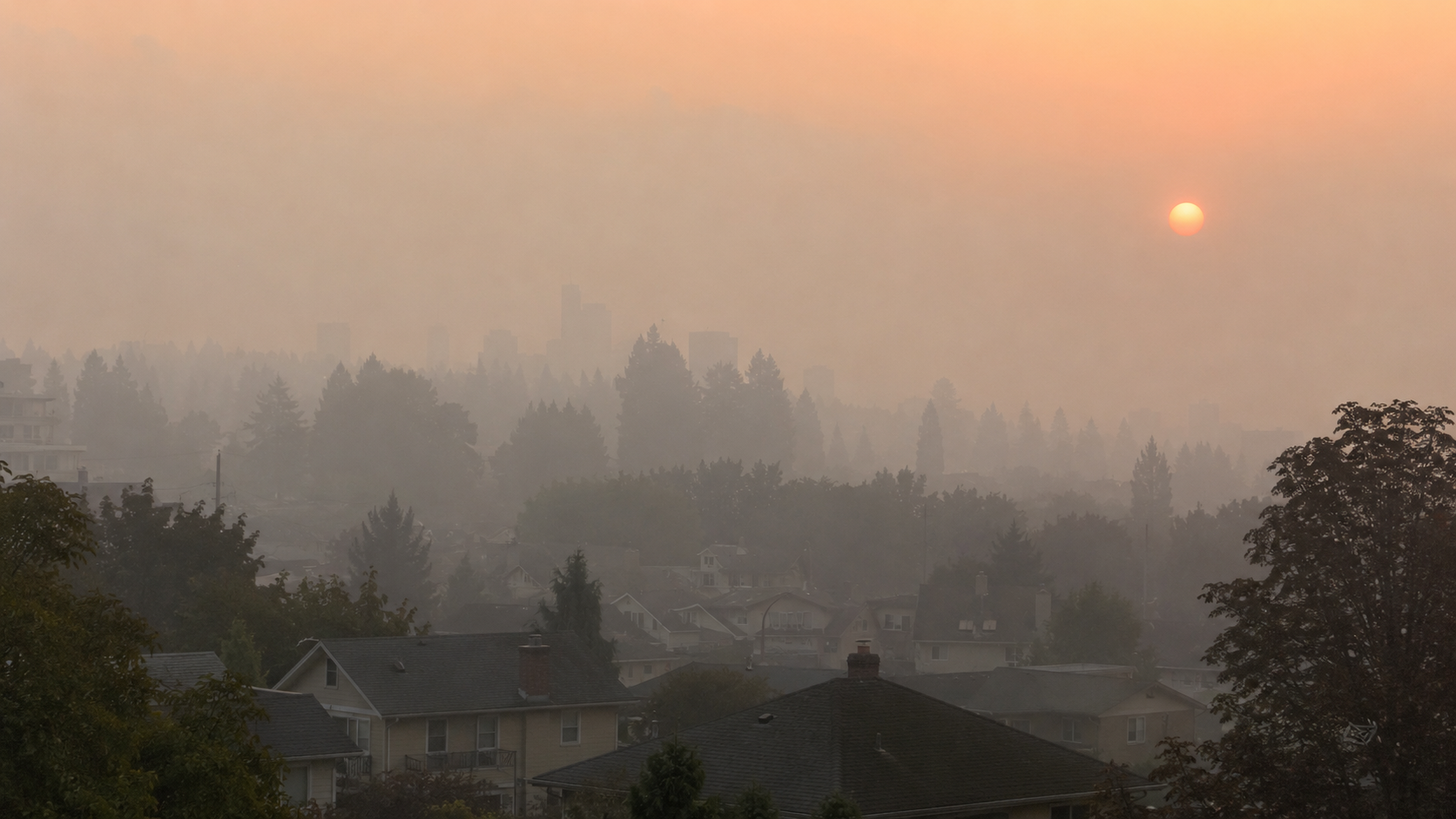
Climate change has also affected air quality. Rising temperatures contribute to longer wildfire seasons, more frequent heat waves, and increased ground-level ozone formation. Wildfire smoke contains high concentrations of PM2.5 that can travel hundreds or even thousands of miles, exposing communities far from the fire itself to unhealthy air.[4]
How does Air Quality Impact Sleep?
A growing body of research suggests that poor air quality can reduce sleep quality, increase nighttime awakenings, and worsen sleep disorders such as obstructive sleep apnea. A systematic review and meta-analysis published in Sleep Medicine Reviews found that long-term exposure to higher levels of air pollution (particularly PM2.5 and NO2) was significantly associated with poorer sleep health in middle-aged and older adults.[5] Other reviews have reported similar associations with shorter sleep duration, increased insomnia symptoms, and greater daytime sleepiness, though researchers note that results across studies have been mixed and the underlying biological mechanisms are still being investigated.[5,6] Proposed explanations include inflammation, oxidative stress, and changes in the nervous system that may disrupt normal sleep regulation. Particularly, PM2.5 appears to be concerning because its microscopic size allows it to reach deep into the lungs and enter the bloodstream, potentially affecting multiple organ systems, including the brain.
Poor air quality may also worsen sleep-disordered breathing. Inflammation caused by pollutants can increase swelling within the upper airway, making it more likely to narrow or collapse during sleep. A systematic review and meta-analysis found that exposure to higher levels of PM2.5 and NO2 was associated with increased severity of obstructive sleep apnea, as measured by the apnea-hypopnea index. Notably, ozone and larger particulate matter (PM10) did not show a significant association with sleep apnea severity.[7] Although air pollution is unlikely to be the sole cause of sleep apnea, it may contribute to nighttime breathing difficulties by increasing airway inflammation and reducing overall respiratory health.
Furthermore, when bedrooms are poorly ventilated, carbon dioxide (CO2) can accumulate overnight as we exhale. Although these concentrations are generally well below harmful levels, research has shown that elevated indoor CO2 is associated with reduced deep sleep, more nighttime awakenings, and lower overall sleep quality.[8,9,10] In one study, sleep quality decreased significantly as CO2 levels rose from 800 to 3,000 ppm, with participants taking longer to fall asleep and spending less time in deep sleep.[8] Other studies have found that simply improving bedroom ventilation to reduce CO2 levels led to measurable improvements in sleep depth and next-day alertness.[9,10] Ventilation can help reduce indoor CO₂ levels and improve overall bedroom air quality.
What Can You Do?
Improving your sleep environment does not require a complete home renovation. A few simple changes can make a meaningful difference:
- Check your local Air Quality Index (AQI), especially during wildfire season or periods of high pollution.
- Keep windows closed when outdoor air quality is poor.
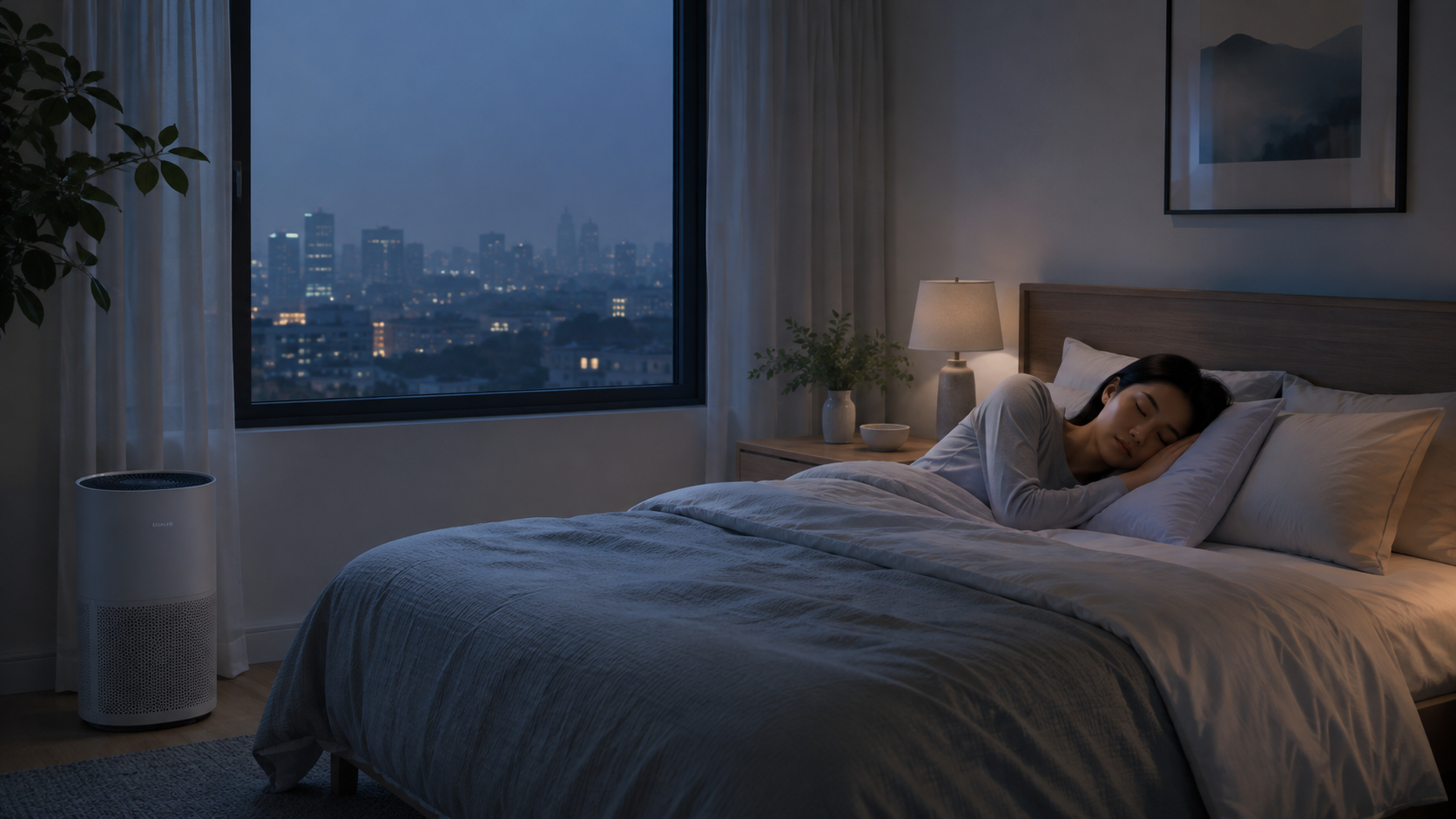
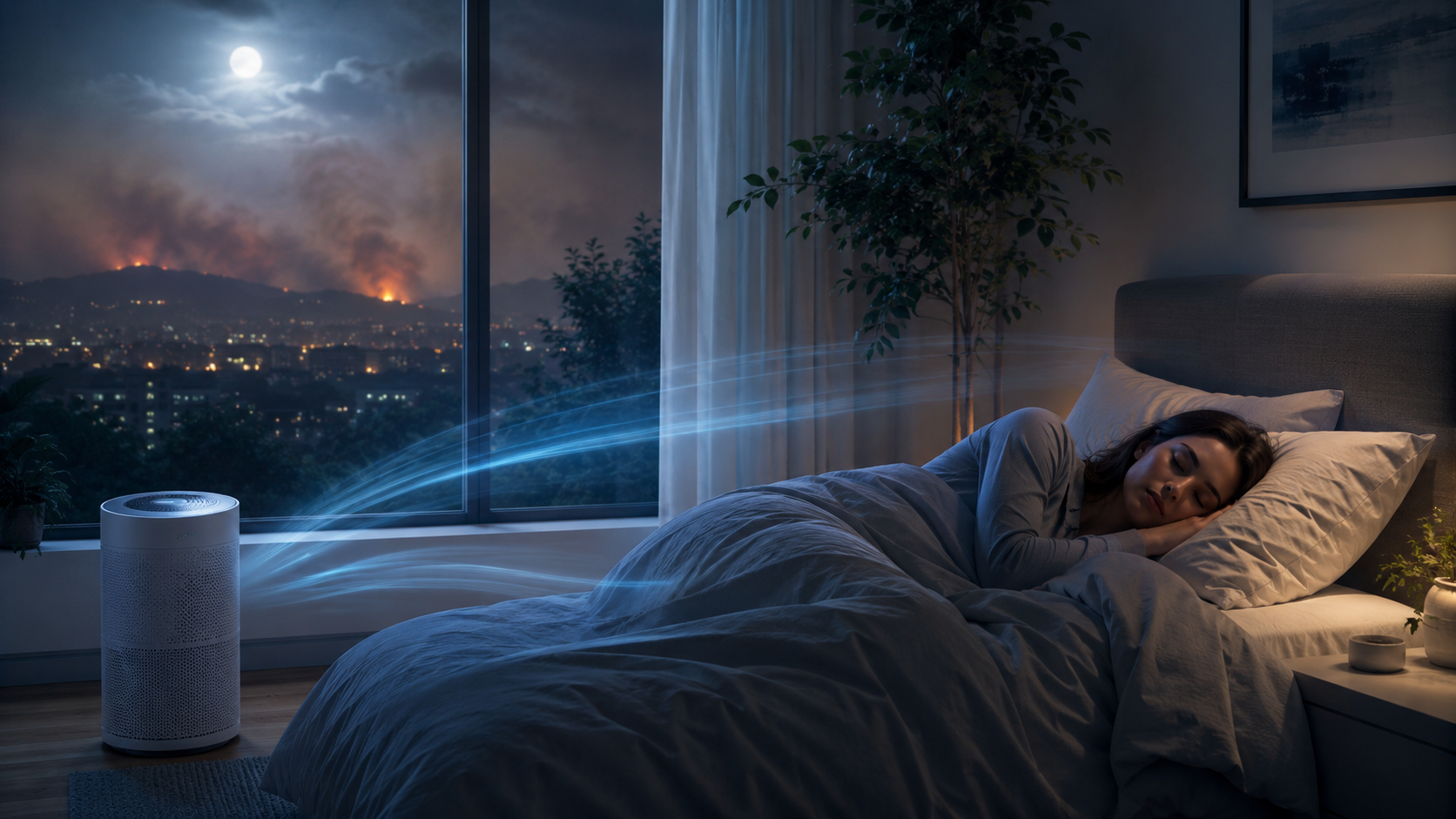
- Use a HEPA air purifier in the bedroom to reduce airborne particles, allergens, and wildfire smoke.
- Replace HVAC filters regularly according to manufacturer recommendations.
- Vacuum with a HEPA-filter vacuum and dust frequently to reduce allergens.
- Maintain indoor humidity between 30% and 50% to discourage mold growth and dust mites.[e]
- Avoid smoking indoors and minimize the use of candles or wood-burning fireplaces.
- Increase ventilation by opening windows or using exhaust fans when outdoor air quality is good.
Conclusion
Air quality is an often overlooked part of creating a healthy sleep environment. From wildfire smoke and outdoor pollution to allergens, household contaminants, and poor bedroom ventilation, the air we breathe throughout the night may influence how deeply and comfortable we sleep. While more research is needed to fully understand the relationship between specific pollutants and sleep disorders, growing evidence suggests that cleaner air and better ventilation may support better sleep quality and nighttime breathing. Fortunately, many of the steps that improve bedroom air quality are simple: monitoring the AQI, reducing indoor pollutants, using appropriate filtration, maintaining healthy humidity levels, and ventilating your home when outdoor conditions allow. Just as temperature, humidity, light, and noise can shape our sleep environment, so can the quality of the air around us. Sometimes, sleeping better may begin with something as fundamental as breathing cleaner air.


.png)
.png)